
Case Study: The Vision Zero Youth Lab
From excluded transit users to architects of a safer, connected Baltimore.
02025 | 39.2904° N, 76.6122° W | Youth Futures Workshop
The Threshold
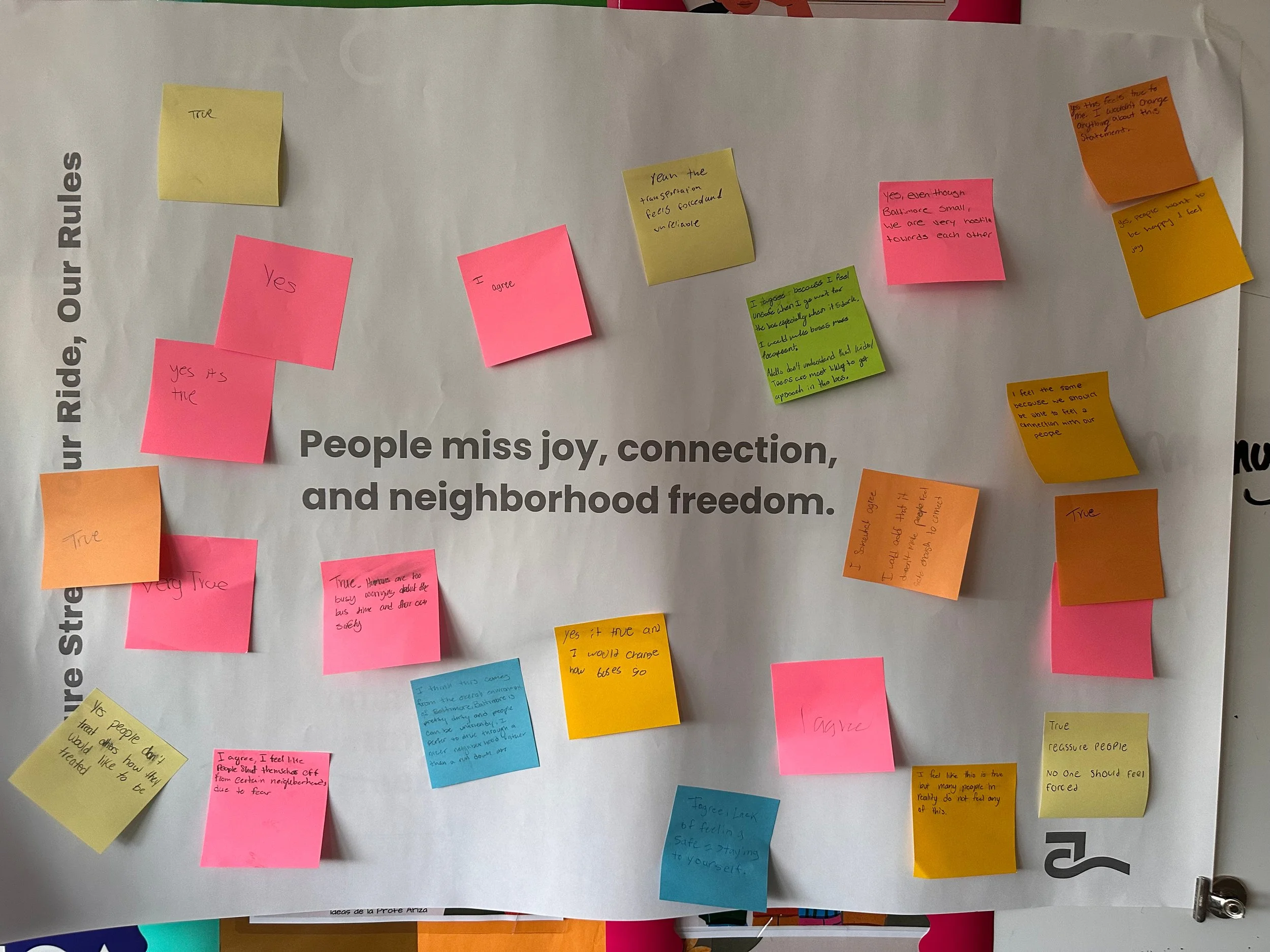
Baltimore stood at a threshold of transit inequity: while BIPOC youth rely heavily on city transit, they are consistently underrepresented in the planning processes that govern their safety. The friction was a "Credibility Gap"—youth held a dual stance of imagining a better city while deeply doubting that institutions would follow through on promises of change.
The Approach
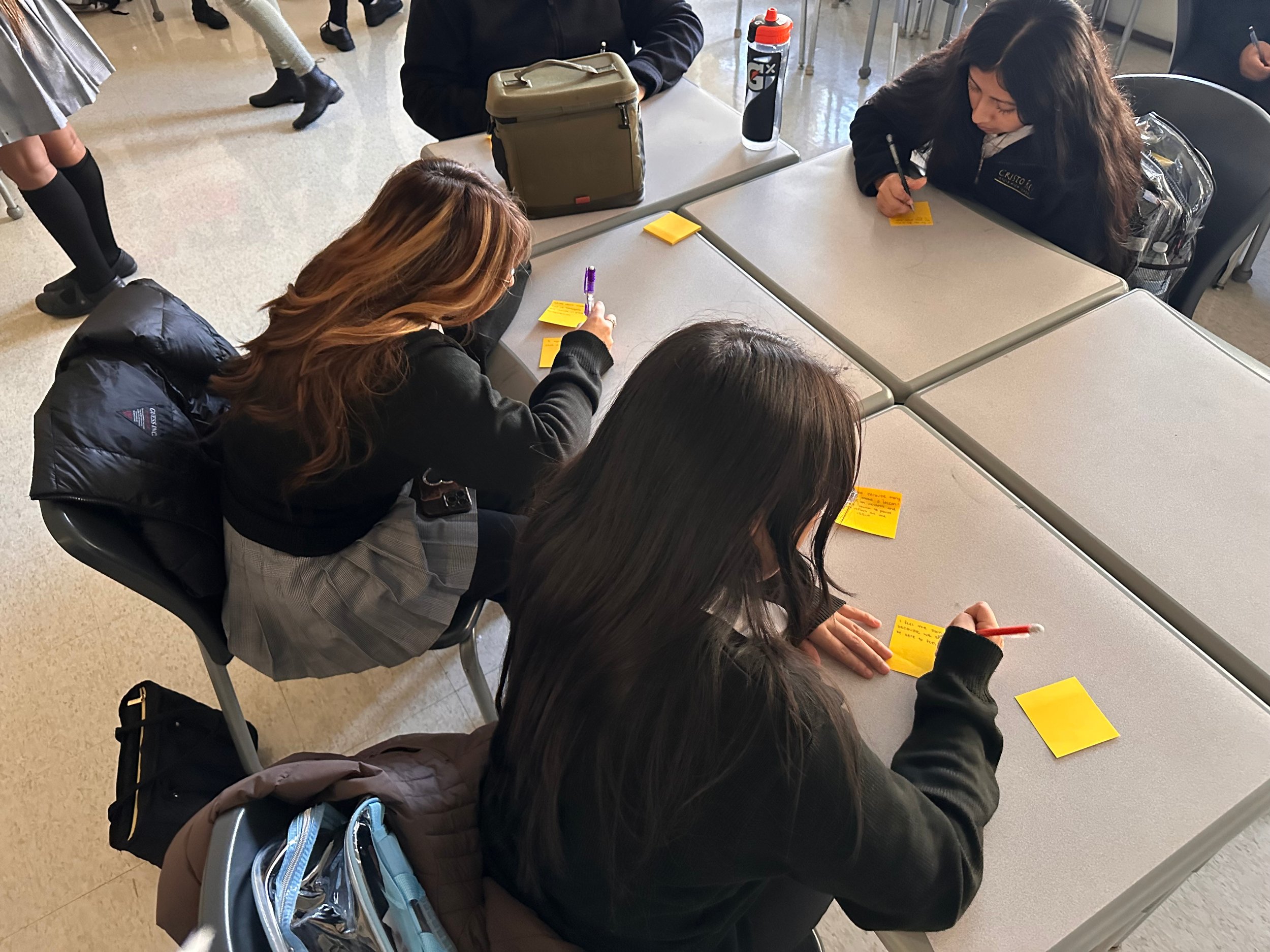
We designed a process to move from lived experience to actionable foresight. Using Futures as a medium, we invited 25 students to step into the year 2035. By practicing Regenerative Participation™, we moved beyond transactional feedback and asked youth to act as "interpreters of the present," surfacing the invisible emotional dynamics of their daily commutes.
The Craft
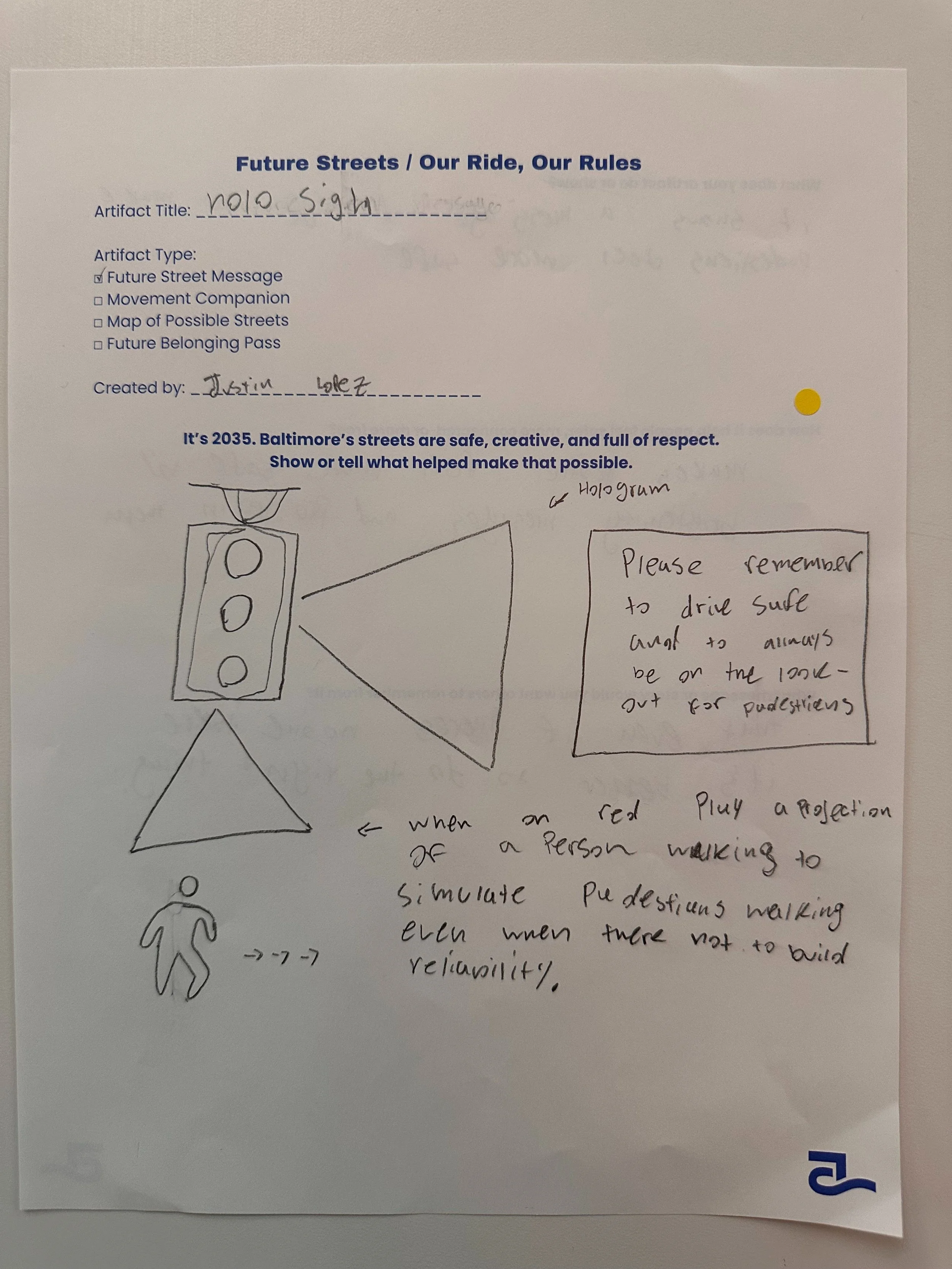
To ground these insights, the youth built "Artifacts from the Future." In our Artifacts Lab, students constructed tangible evidence of a preferred mobility system, including the "Peace Pass" (a cultural marker of shared safety) and holographic visibility tools. These were not just "art projects"; they functioned as social infrastructure, proving that safety is a shared cultural ethic rather than just an engineering problem.
The Inheritance
The Vision Zero Team inherited a Clear Emotional Blueprint for the city’s Action Plan. By elevating youth as architects of the future, the city gained a set of youth-informed narratives—centered on visibility and accompaniment—that now guide the official creative campaign. The students left with a renewed sense of agency, having turned their "unthought" fears into concrete signals for city-wide transformation.
The Signal
A realization that Lighting communicates Care, not just Illumination—a basic condition of dignity that signals a city’s commitment to its most vulnerable residents.