

A Call to Action: Building a Public Interest Futures Brigade
When it comes to futures thinking — the ability to anticipate, imagine, and shape long-term possibilities — there is no public interest pathway. Foresight careers are still largely confined to corporate strategy departments, government agencies, public policy think tanks, management consulting firms, and military strategy departments. Meanwhile, communities on the frontlines of social, economic, and environmental change are left reacting to futures they did not design.

Beyond Fairness: Seeding New Possibilities for Our Future
…when we talk about “fairness,” we might unintentionally limit our thinking to a transactional model—balancing scales, distributing harm, and managing resources. Fairness, as a frame, feels safe. But it’s also static. It doesn’t invite us to question the very systems that created the inequities we’re trying to address.

What the US Foresight Office Can Learn from the US Department of Arts and Culture – Part 2
In our first exploration of the lessons the U.S. Foresight Office (FOF) can learn from the U.S. Department of Arts and Culture (USDAC), we touched on the power of imagination, the importance of a people-centered approach, and the integration of arts and culture in creating a more futures-focused world. These elements are crucial, but as we delve deeper into the practices of the USDAC, we uncover even more profound insights that can help to inform the potential U.S. Federal Office of Foresight.

What the US Foresight Office Can Learn from the US Department of Arts and Culture
The idea of establishing a Federal Office of Foresight (FOF) in the U.S. government is gaining traction among thought leaders and policymakers who recognize the need for a proactive approach to navigating future challenges.

Empowering Democratic Decision-Making with COPAL: The Power of Five Finger Consensus
By practicing Five Finger Consensus within their 8-member leadership team, COPAL is embodying the fractal theory that what we do on a small scale reflects and influences the larger scale.

Awakening Creativity with Visual Thinking Strategies: A COPAL Experience
Recently, we had the privilege of guiding COPAL’s Leadership Team through a warm-up exercise inspired by Visual Thinking Strategies (VTS), using Diego Rivera’s iconic Detroit Industry Mural. This adapted approach is a powerful tool to activate the creative center of our brains, helping participants "see" more holistically and process information in new ways.

The Importance of Imagination and Visualization in Futures Work
Recently we had the honor of guiding 200 Boys and Girls Club leaders through a transformative experience, helping them to imagine a workday in 2044.
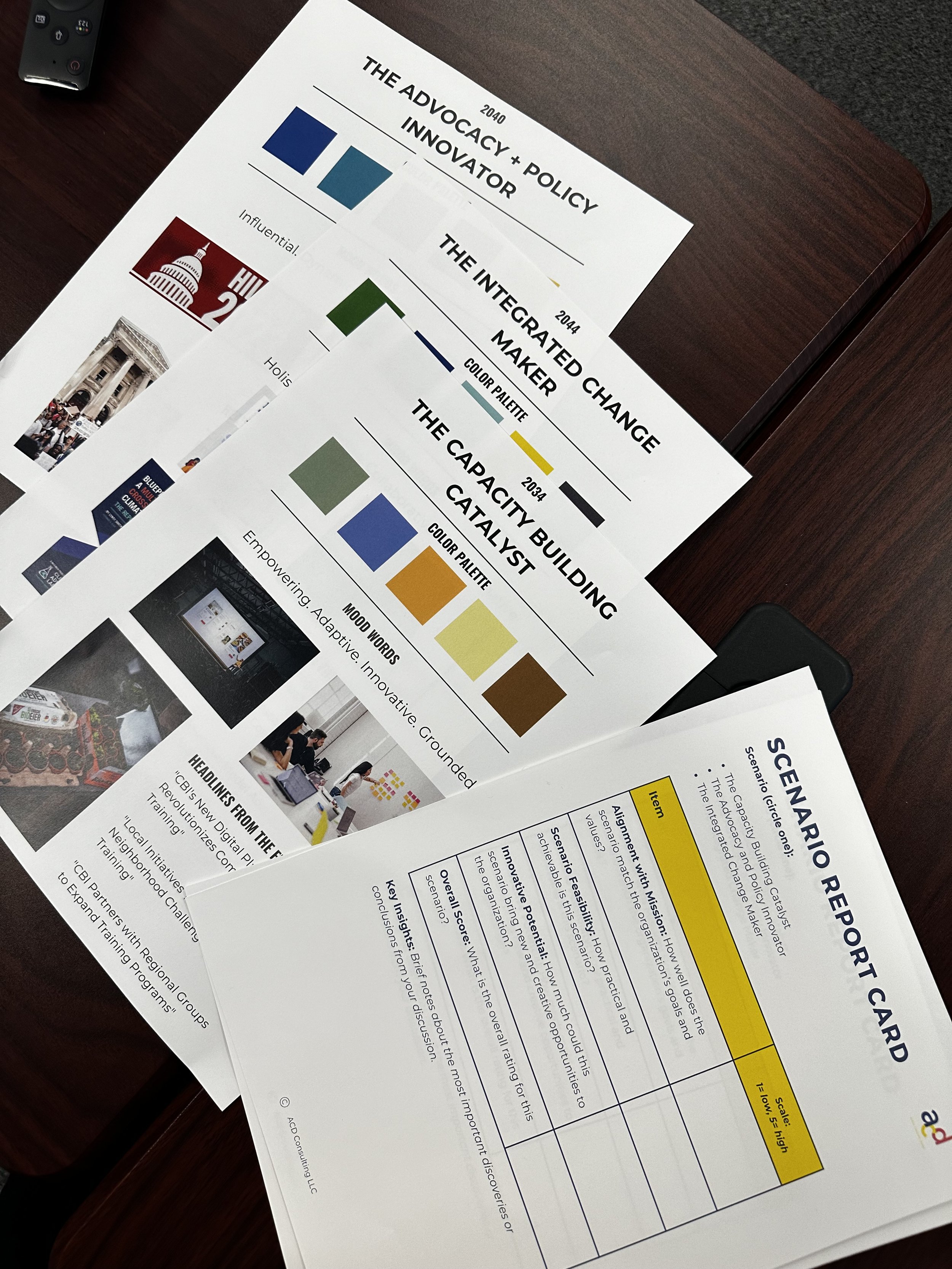
The Power of Scenario Planning: Insights from Our Work with Community Building Initiative
Recently, we had the privilege of partnering with Community Building Initiative (CBI) to explore their potential futures and develop strategic scenarios that help to inform their growth and impact over the next two decades.