
Analog Version: What If the Park Dreamed Back?
The TEN Baltimore Descendant Community Showcase was a deep dive into the foundational histories of Carroll and Druid Hill Parks, centered on the voices of the descendants of the enslaved people whose stories shape these landscapes. Their presence and testimony created the ground from which this Spiral Lab emerged.
We began with rocks. Each person holding a billion-year-old companion, cool in the palm, grounding us into time scales much larger than our own. Names were spoken into the circle, paired with a single word for arrival. The rocks traveled with us through memory, grief, and imagination—anchors for what was heaviest, and what was still possible.
This second Spiral Lab unfolded entirely in analog form. No screens, no digital canvases. Just paper, pens, river rocks, and the park itself as co-facilitator. The design asked participants to treat the land as both witness and author: to listen for its whispers, acknowledge its griefs and gifts, and dream futures worth inheriting.
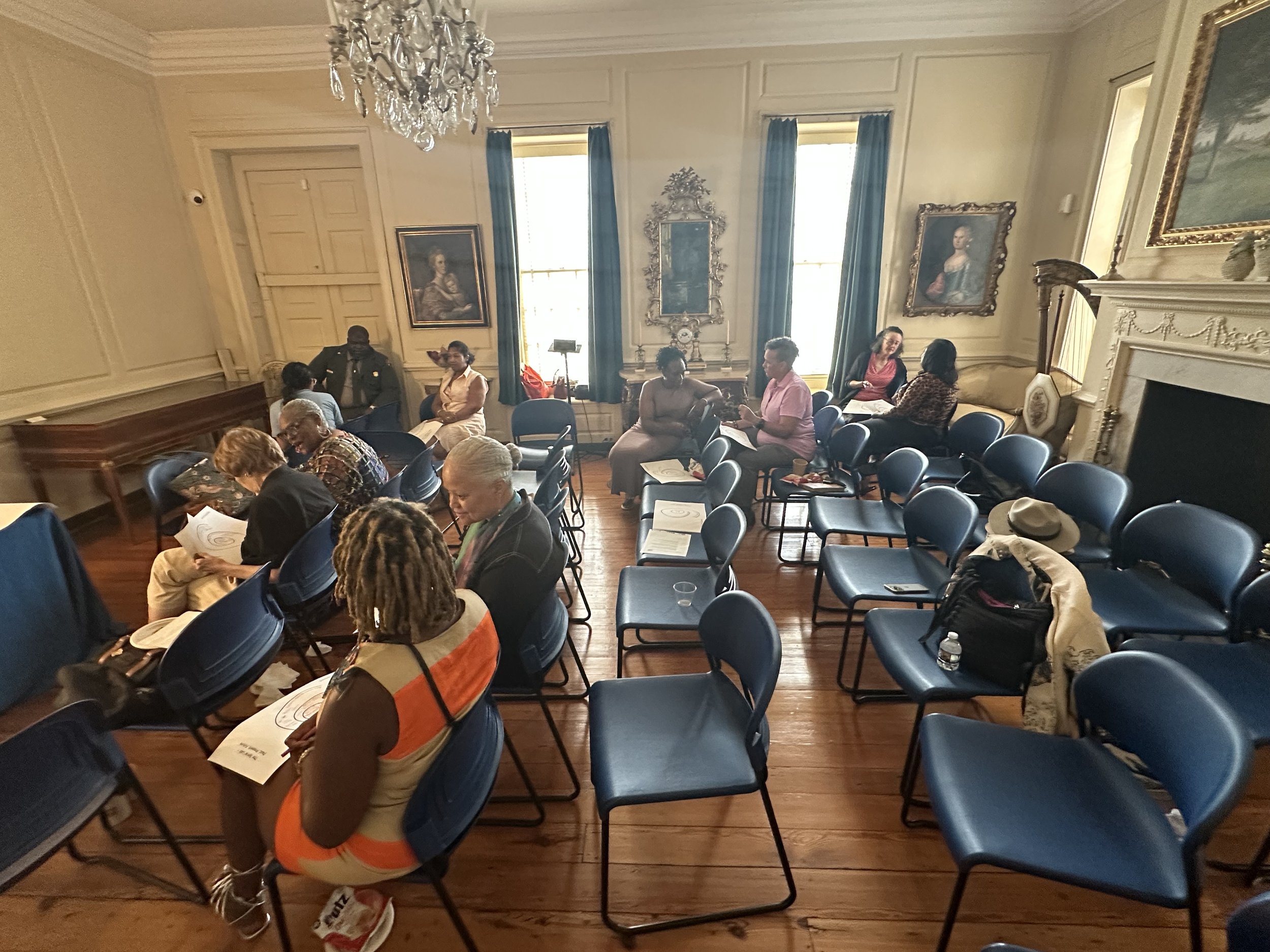
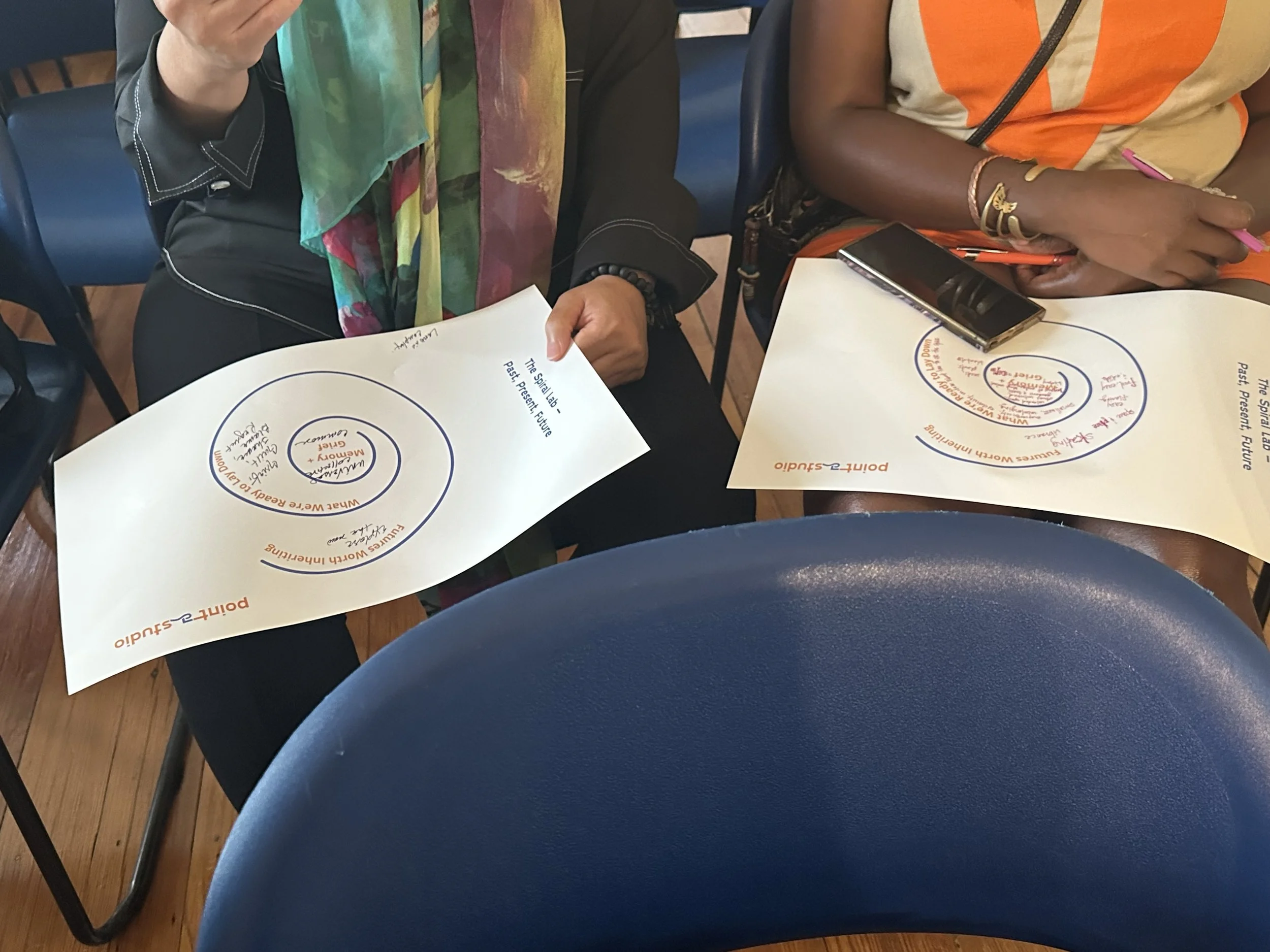
Spiral Conversations
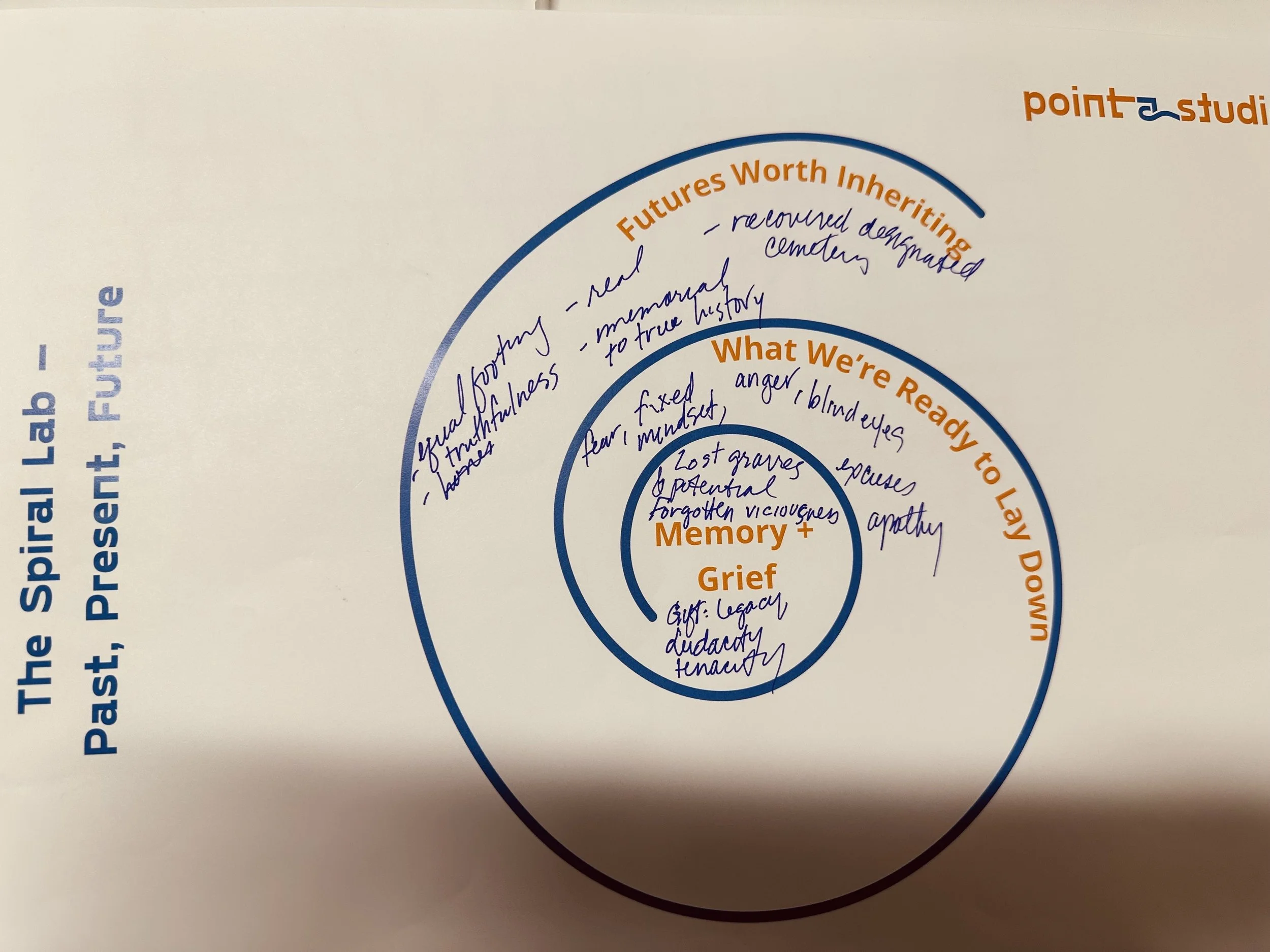
At the center, participants named what the park carries: displacement, broken families, lost graves, the legacy of enslavement, erasure, genocide. Alongside these griefs came gifts: seeds, trees, black walnut, earth, ancestors, wildlife. Memory surfaced as heavy, but also insistent—reminding us that even in loss, the land continues to give.
In the middle ring, people placed what they were ready to lay down: fear, generational pain, redlining, segregation, food insecurity, eurocentricity, apathy, guilt, stress, ill intentions, and the smallness that comes from shrinking ourselves or our communities. Setting these patterns down created space for something larger to take root.
And in the outer ring, futures emerged: memorials that tell the truth, belonging on equal footing, greenspace that is loved and valued, skating paths, equity, joy, vibrance, love, recovery, wholeness. The spirals became portals—each layer holding absence, release, and possibility.
A Timeline of Futures
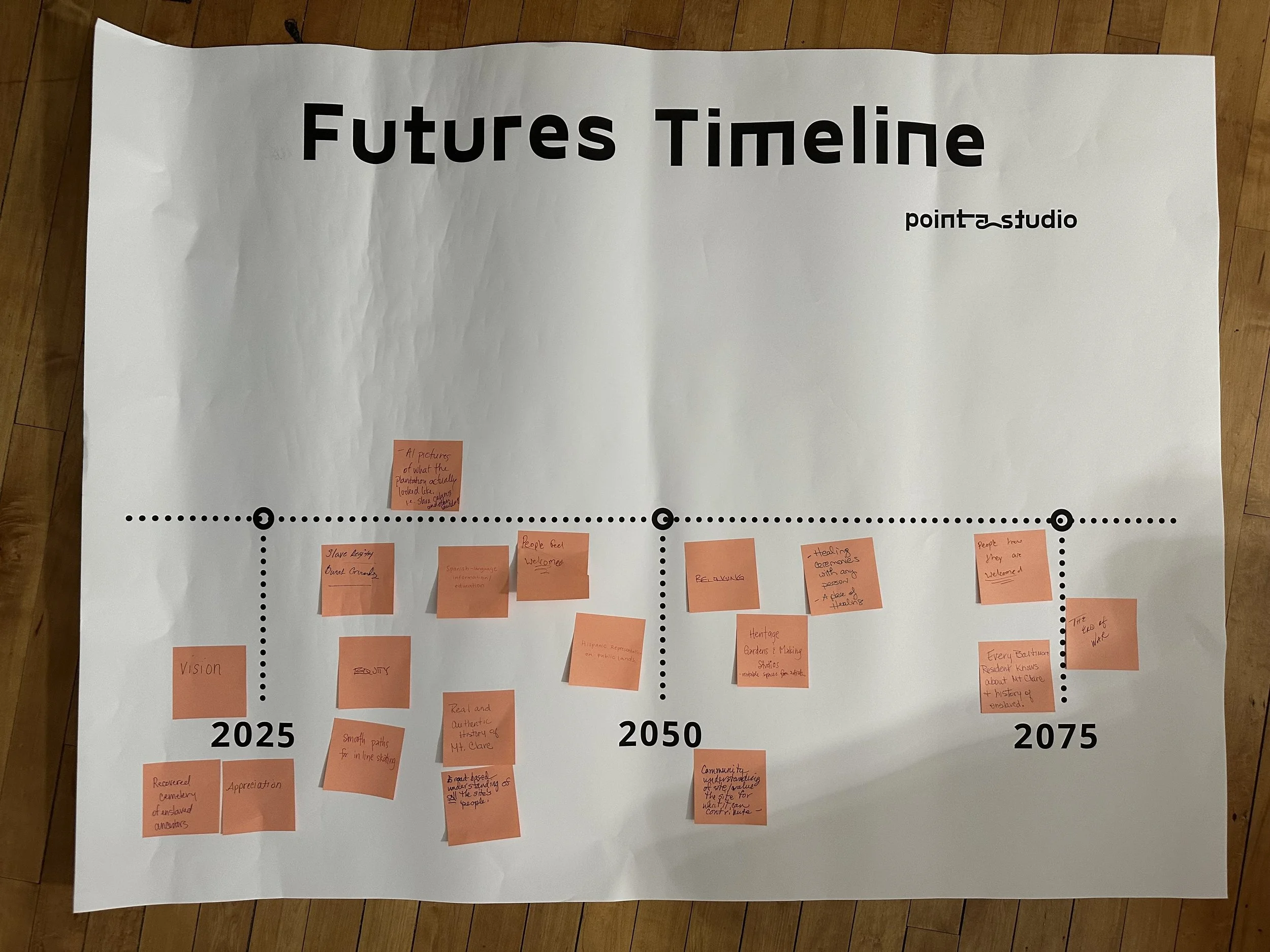
When participants carried pieces of their spirals onto a collective 2025–2050–2075 timeline, a pattern took shape:
2025 asked for truth-telling and repair: AI renderings of the plantation as it really was, a recovered cemetery of enslaved ancestors, multilingual welcome, smooth paths for skating.
2050 envisioned sites of healing and making: ceremonies for all, heritage gardens, studios for artists, Indigenous representation woven into public lands.
2075 imagined belonging so deep that every Baltimore resident knows the true history of Mt. Clare—and peace is named as the end of war.
The arc was clear: from visibility and equity now, to collective healing mid-century, to radical belonging in 2075.
Seeds for Now
The lab closed with a small ritual: each person taking a wooden bead (seed), naming one action they would carry forward. These micro-commitments—tiny seeds—made the future tangible. Belonging wasn’t just an idea; it was something participants could begin building that week.
Reflections
What struck most was how analog materials sharpened the imagination. Rocks and paper made the invisible visible. The spiral format turned both grief and gift into design data. And the collective timeline revealed how near-term gestures scaffold long-term transformation.
Together, the lab reminded us: futures worth inheriting are not abstract. They live in memory, in grief, in gifts, in the willingness to lay something down and pick something else up. They live in small actions—beads, rocks, words—that accumulate into new conditions for thriving.
The park is not only backdrop, but co-author. To dream with land is to practice futures with humility, courage, and care.